Recent Finds
Roman Brooches
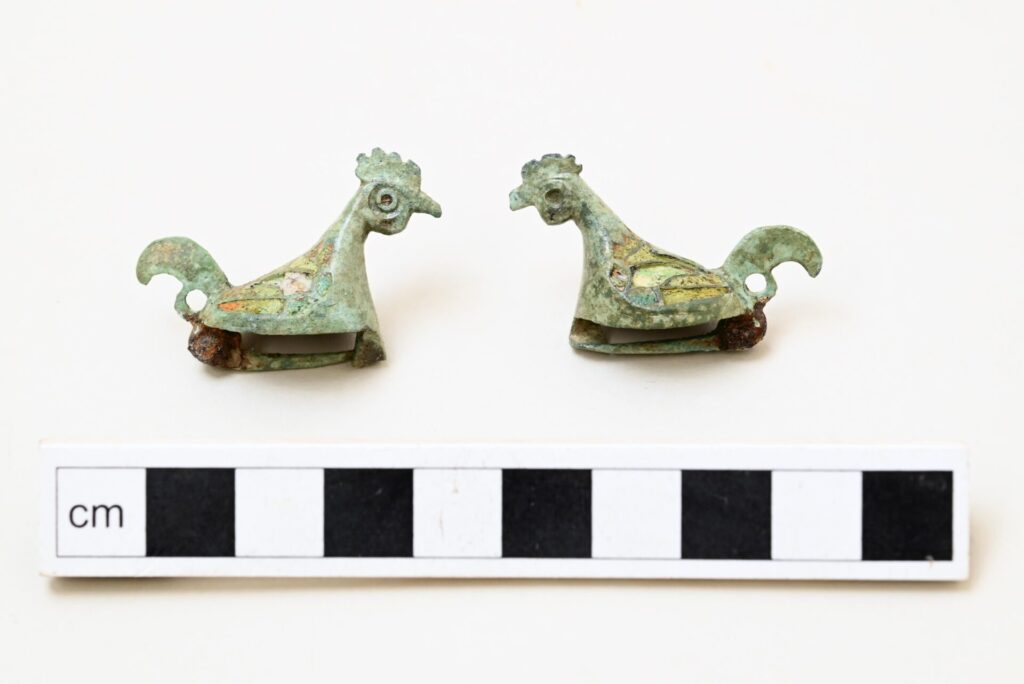
In Roman Britain brooches were worn as symbols of identity. They revealed various aspects of an individual’s life such as where they came from, and their status and position in society. This type, in the form of a sitting cockerel, is thought to indicate that the wearer was a devotee of the cult of Mercury.…
Read MoreLate Roman Raven
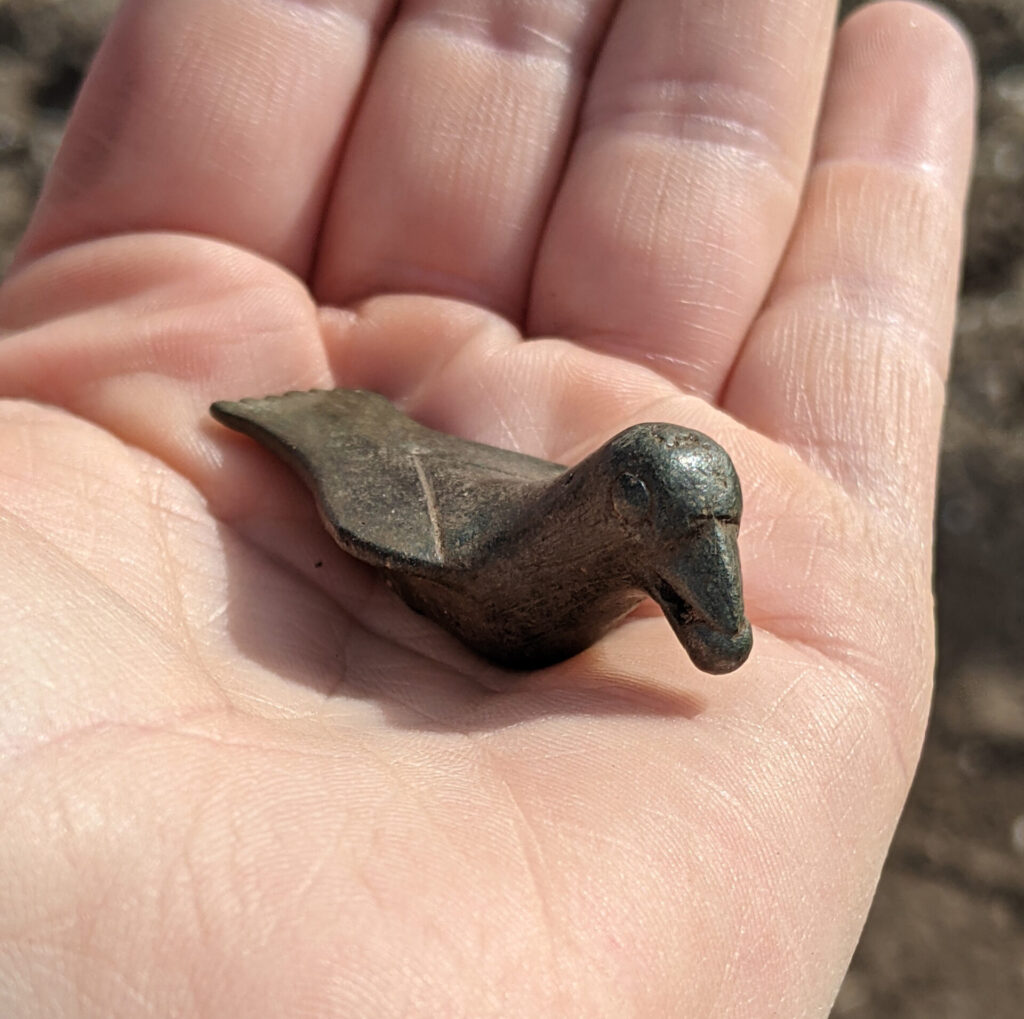
A rare find in Winchester
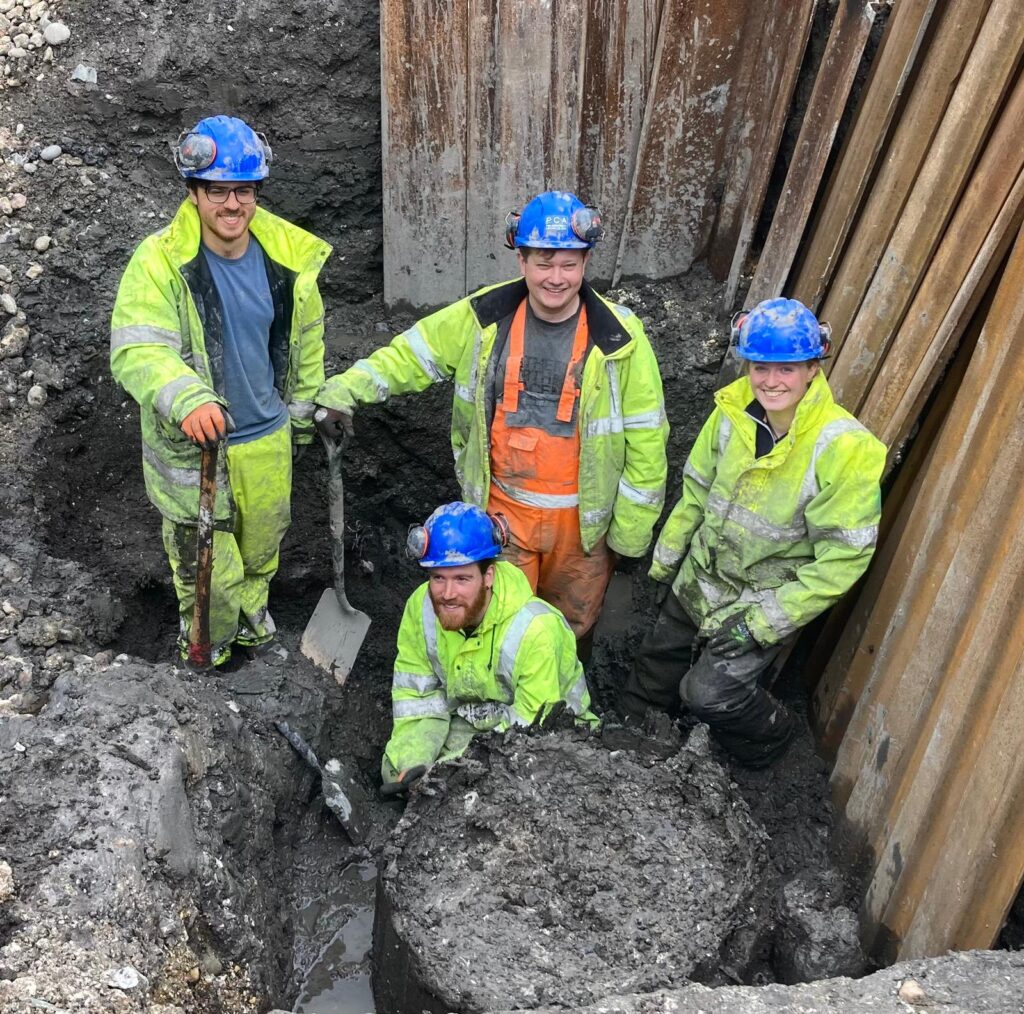
Staff from our office there have unearthed over 1.5m of a timber-lined medieval well, buried in the alluvium under Upper Brookes Street car park, whilst carrying out a mitigating archaeological excavation ahead of the construction of a new medical practice. . Site Supervisor Tom worked alongside Elliott, Colin and Holly to recover the brilliantly preserved…
Read MoreTelephone Box Museum
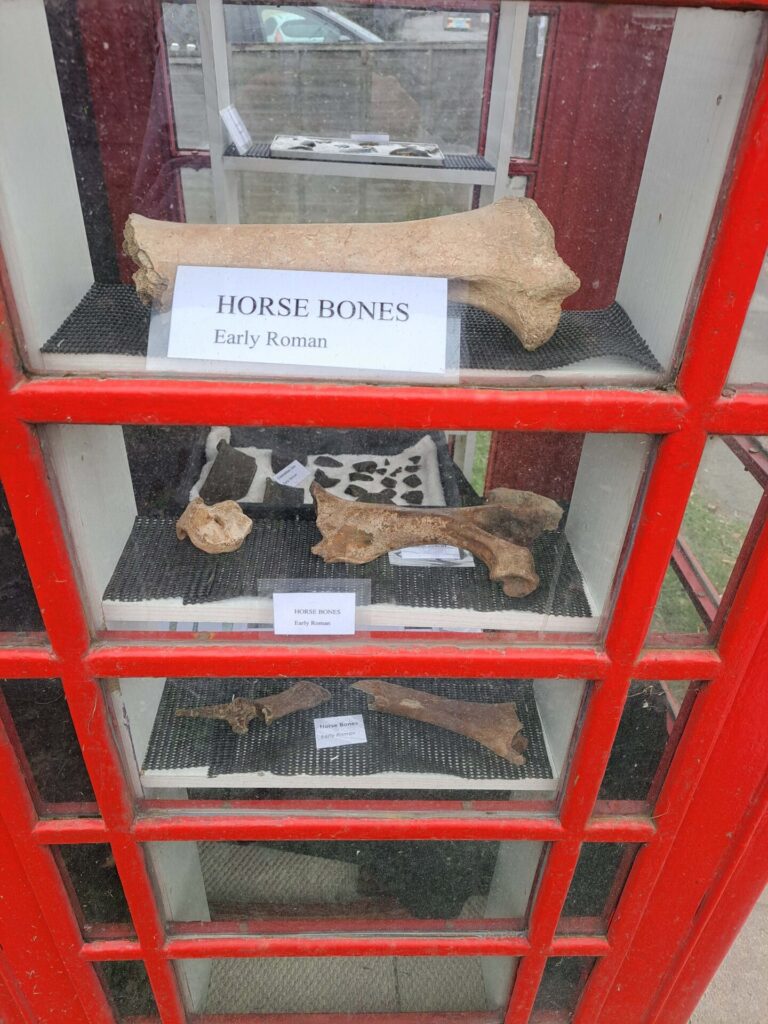
A red phone box in Great Yeldham has been repurposed in an inspired way by the community: as a mini museum with a display of finds from our excavation in the village! . Prior to the construction of new homes, PCA undertook an archaeological investigation of the site. Trial trenching revealed artefacts dating from the…
Read MoreRoman cetacean feast
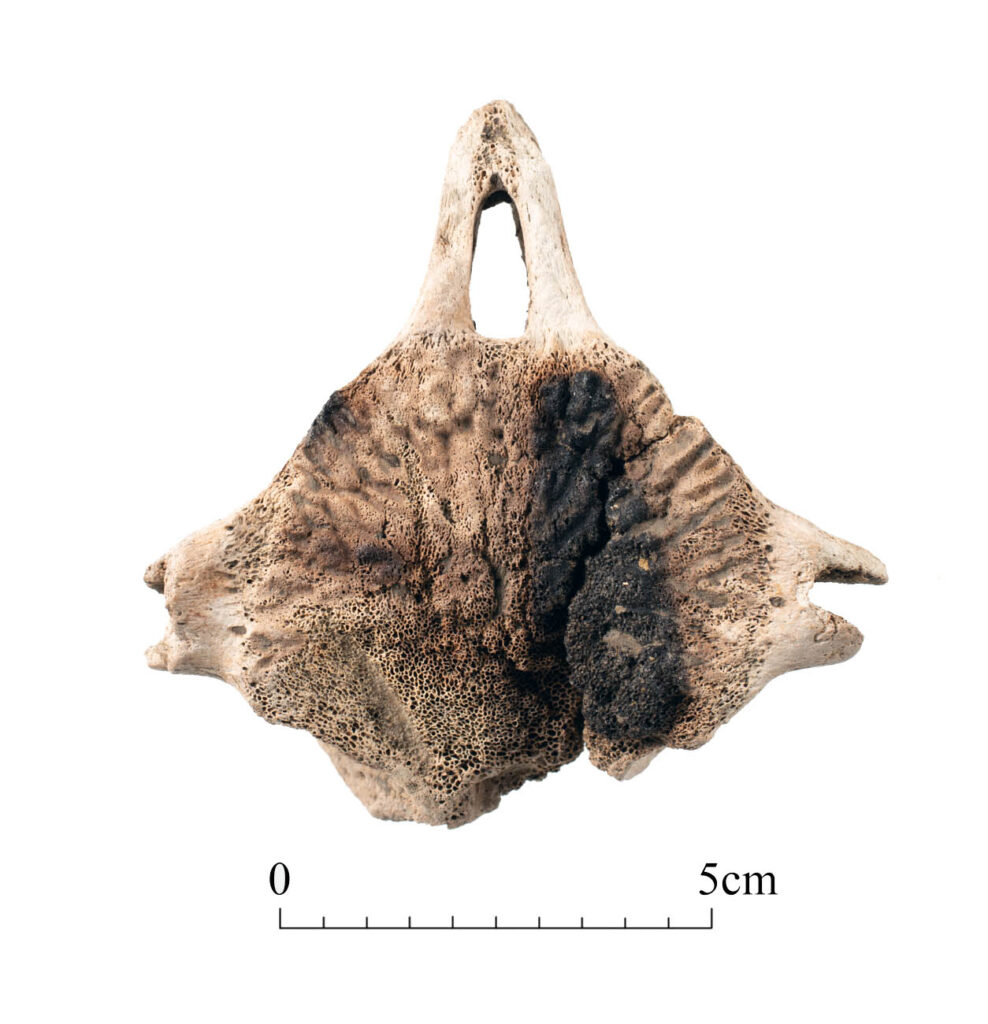
[vc_row type=”in_container” full_screen_row_position=”middle” column_margin=”default” column_direction=”default” column_direction_tablet=”default” column_direction_phone=”default” scene_position=”center” text_color=”dark” text_align=”left” row_border_radius=”none” row_border_radius_applies=”bg” overflow=”visible” overlay_strength=”0.3″ gradient_direction=”left_to_right” shape_divider_position=”bottom” bg_image_animation=”none”][vc_column column_padding=”no-extra-padding” column_padding_tablet=”inherit” column_padding_phone=”inherit” column_padding_position=”all” column_element_direction_desktop=”default” column_element_spacing=”default” desktop_text_alignment=”default” tablet_text_alignment=”default” phone_text_alignment=”default” background_color_opacity=”1″ background_hover_color_opacity=”1″ column_backdrop_filter=”none” column_shadow=”none” column_border_radius=”none” column_link_target=”_self” column_position=”default” gradient_direction=”left_to_right” overlay_strength=”0.3″ width=”1/1″ tablet_width_inherit=”default” animation_type=”default” bg_image_animation=”none” border_type=”simple” column_border_width=”none” column_border_style=”solid”][image_with_animation image_url=”13232″ image_size=”medium_large” animation_type=”entrance” animation=”None” animation_movement_type=”transform_y” hover_animation=”none” alignment=”center” border_radius=”none” box_shadow=”none” image_loading=”default” max_width=”100%” max_width_mobile=”default”][vc_column_text css=”.vc_custom_1674558073726{padding-right:…
Read MoreAn east end monkey…
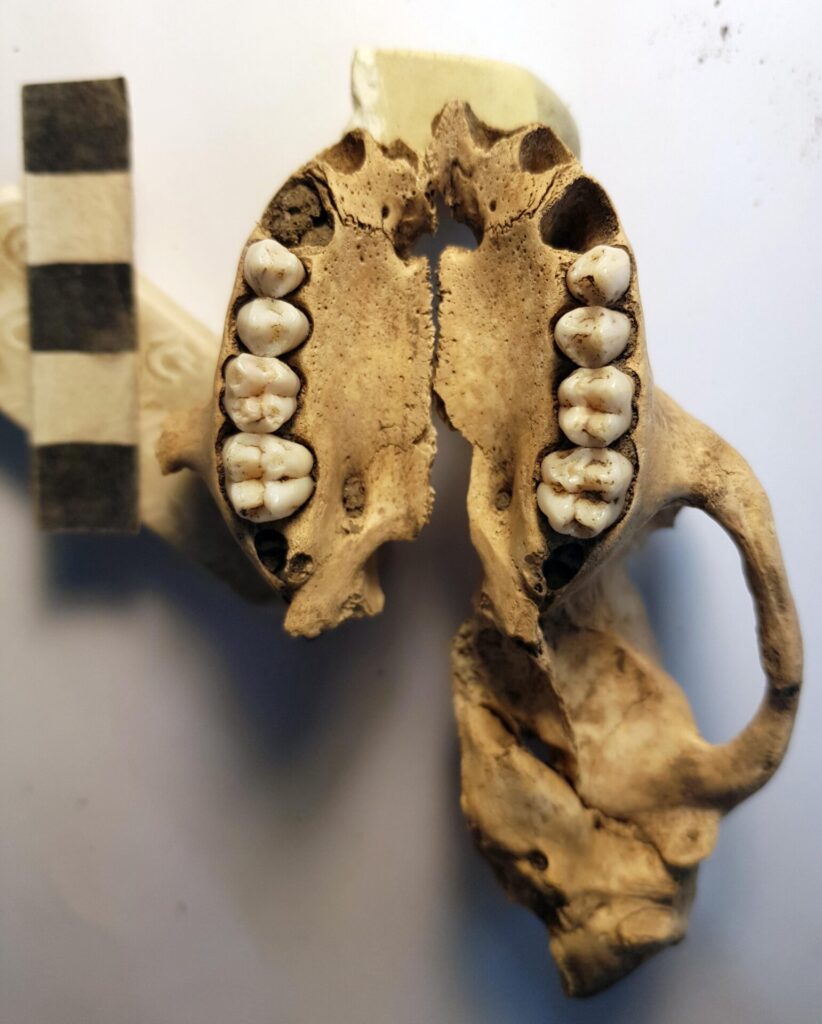
We have an unusual find from a site in East London – the severed head of a monkey from a mid-19th-century context. Our animal bone specialist Kevin says “Its wisdom teeth haven’t erupted so it is probably less than 6 years of age but definitely more than 2 years. I think it is likely to…
Read More19th Century Band of Hope Temperance Medal
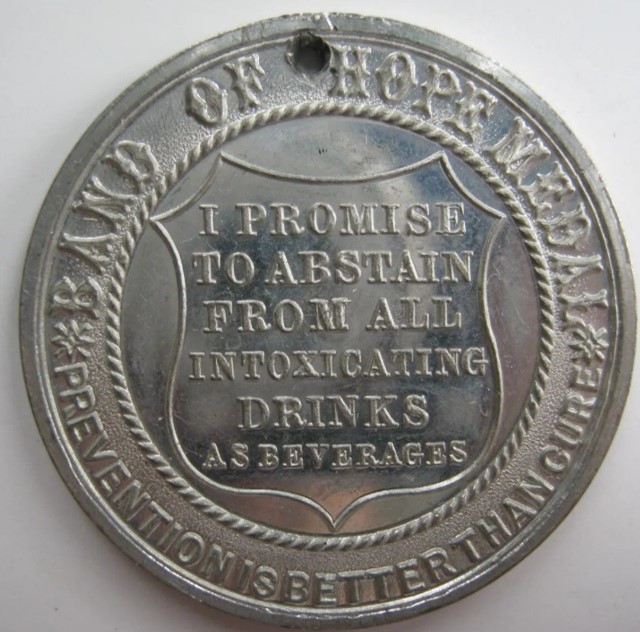
We recovered a white metal medal during recent investigations in Gloucester. These medals, 39mm in diameter, were awarded to those who took a pledge of abstinence from alcohol. On one side the medal reads “Band of Hope Medal – Prevention is Better than Cure – I Promise to Abstain from All Alcoholic Drinks as Beverages”.…
Read MoreAn exciting find from Bermondsey Square
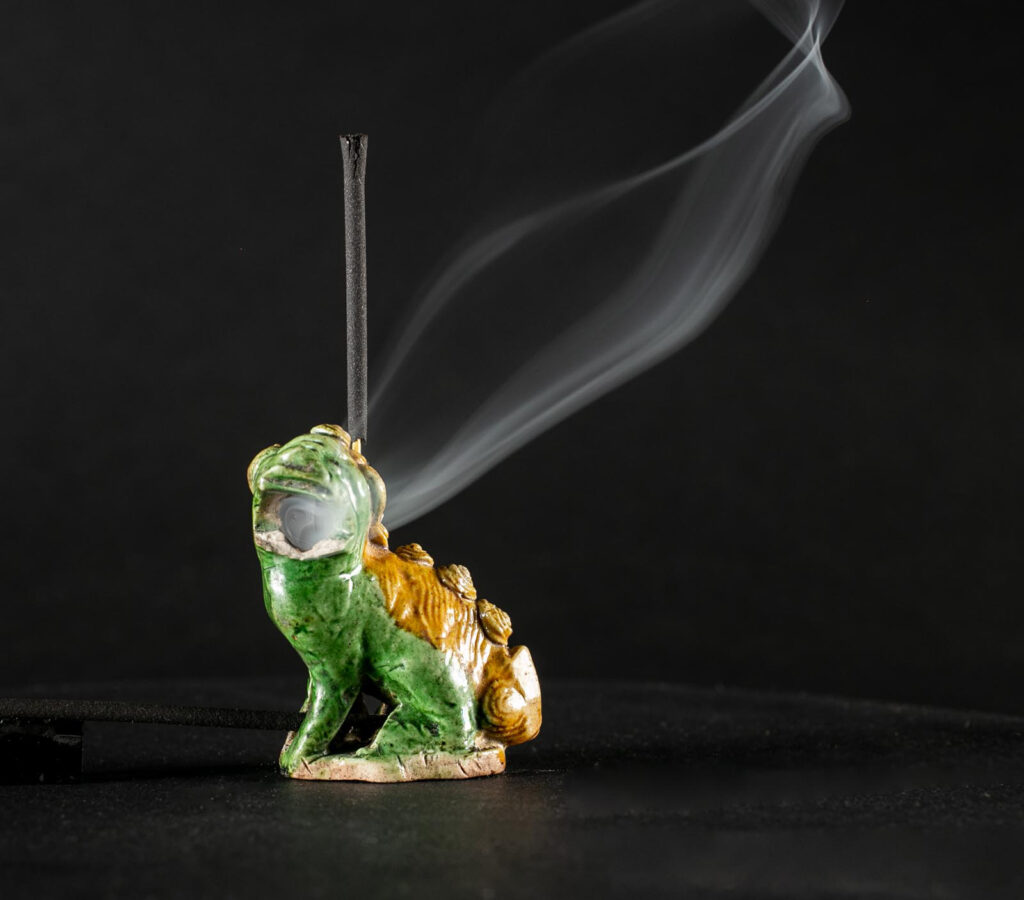
We have a wonderful rare find from Bermondsey Square – a moulded Chinese stoneware lion sejant figurine from a late 18th century domestic context. . This has been tentatively identified as an incense stick holder, 香插, xiang cha (‘incense device for insertion’) or possibly 香台 xiang tai (‘fragrance platform’). It’s 6cm tall and almost intact…
Read MoreIron Age decorated spindle whorl
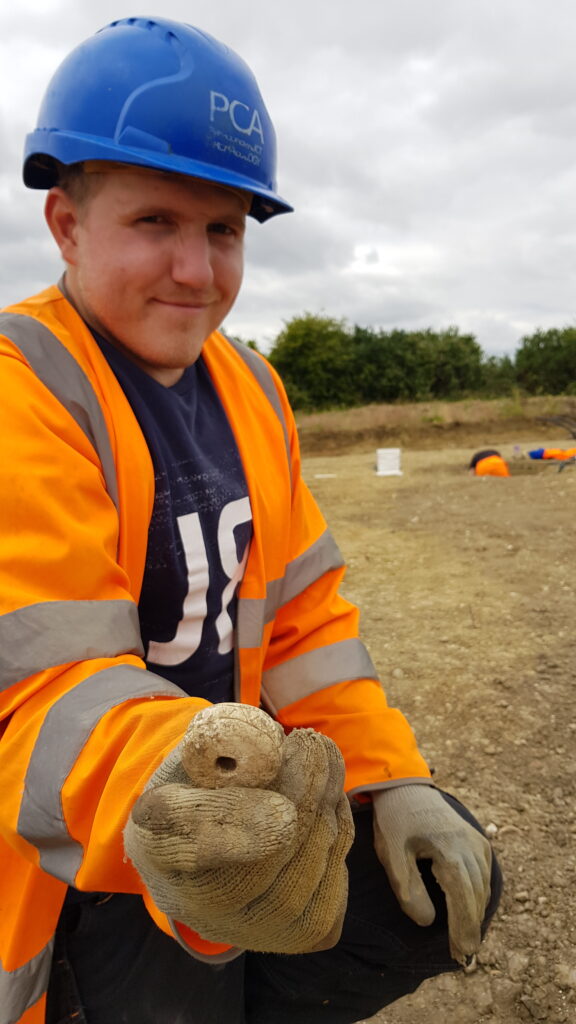
A great find from Joel this week! This unusual, decorated chalk spindle whorl came from an Iron Age ditch at St Neots, Cambridgeshire. Chalk objects like this are very fragile and rarely survive.
Read MoreIcenian silver coin with a previously unknown die stamp – another first for PCA
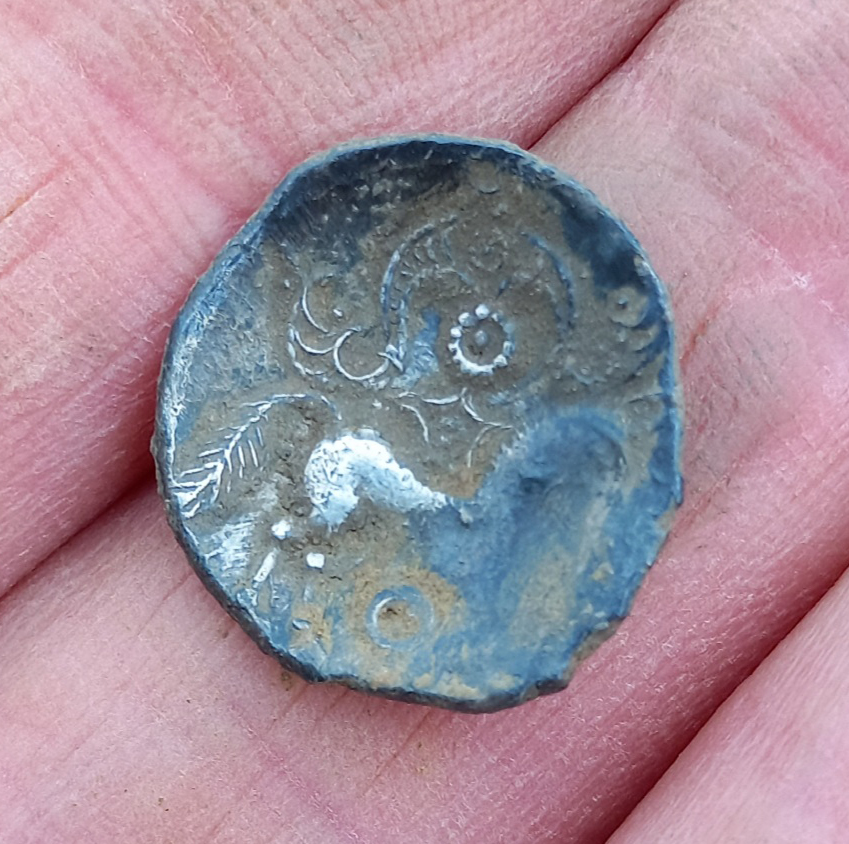
We’ve had an amazing find this week from a site in Suffolk The coin is an Icenian Bury E type silver unit, of which Talbot (2017) records only 4 known examples. The reverse die of this coin (the side with the horse) is known on three of them, two of which are sub-classified by Cottam…
Read MoreA Roman Chi-Rho Graffito
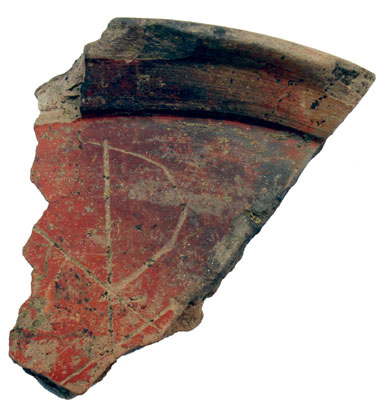
Our Roman pottery specialist Eniko has written a fascinating article on this rare and significant find, just published in Britannia.
Read MoreThe Bronze Age cremation urn – an update
The Bronze Age vessel we found in April at Cholsey has now been micro-excavated, with potentially fascinating results. The beautifully decorated cremation urn was found deliberately buried in the centre of a droveway running through the site in Oxfordshire as an apparent votive offering. Scans confirmed it held a cremation, and the precise 3-dimensional model…
Read More