
Recent Finds
Giant Spider Conch
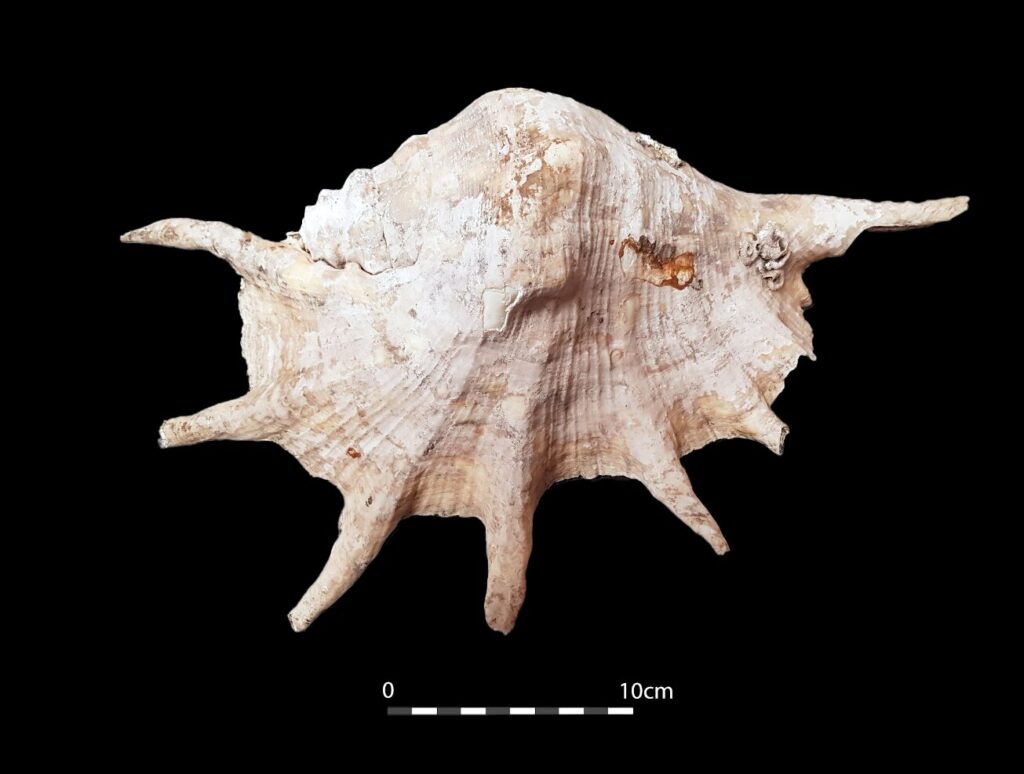
This large conch shell was recently found in a 19th- or early 20th-century deposit at a site in Shadwell, E1W. It’s been identified as a Giant Spider Conch (Lambis truncata truncata), a subspecies found in the tropical and subtropical Indian Ocean. At 34cm long, this specimen is close to the species’ maximum size of around…
Read MoreMesolithic Tranchet Axe
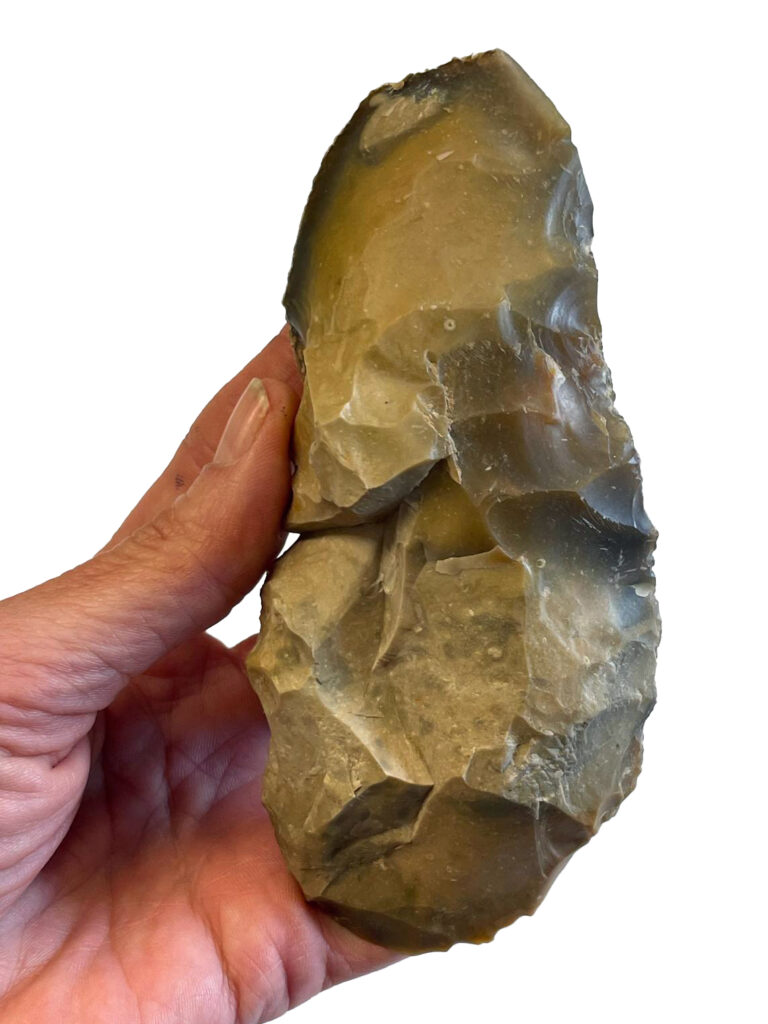
This week’s #FindsFriday is a Mesolithic tranchet axe from a site near Chichester. Tranchet axes were essential tools in the Mesolithic, used for woodworking and other daily tasks. This one was found in a pit beside four parallel curvilinear features dating to the Early Bronze Age. The site revealed evidence of thousands of years of activity,…
Read MoreSilver Fibula
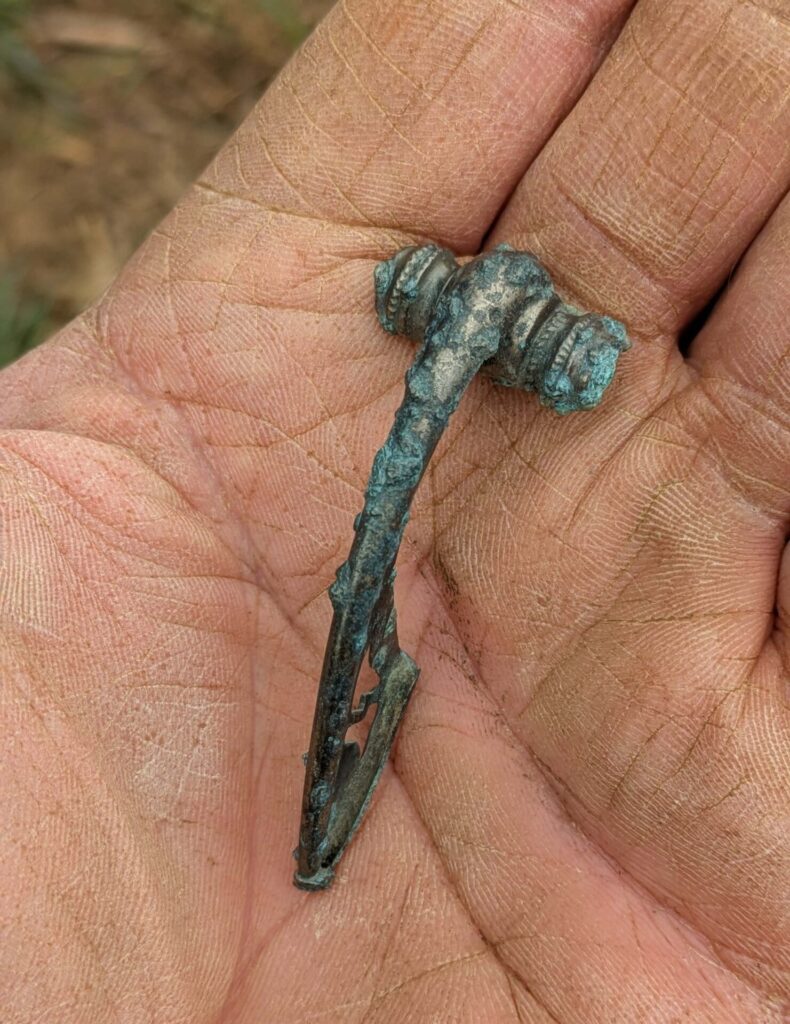
This week’s #FindsFriday is a silver fibula brooch from a Roman rubbish pit in Gloucestershire. The same pit yielded a wealth of finds, including Roman pottery, animal bone, and ceramic building material, alongside a small copper alloy pin and two pieces of copper alloy wire. Initially, patches of verdigris from the copper objects clung to…
Read MoreIron Age antler pick
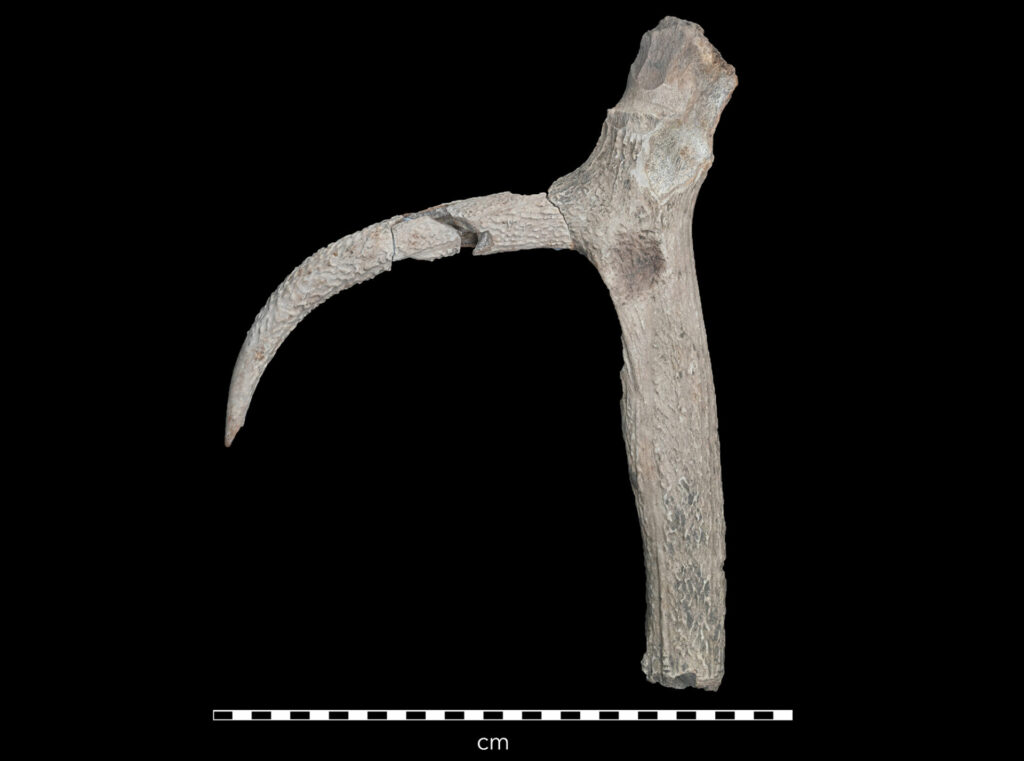
This week’s #FindsFriday is an antler pick, a tool most commonly associated with the Neolithic period, where they were used to quarry stone and dig the ground for the construction of monuments like Stonehenge. However, this example from Suffolk was found in a pit alongside late Iron Age pottery. In the Neolithic period, antler picks…
Read MoreFind of the Week
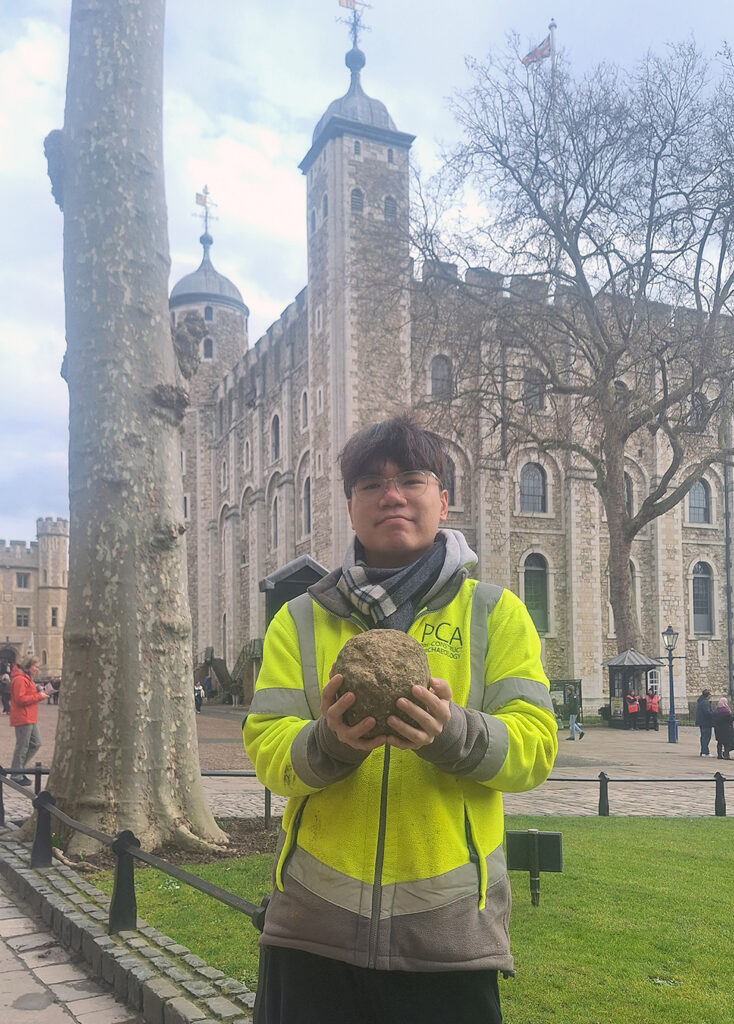
Here’s Timothy, from the team working at the Tower of London, with a medieval gunstone – what a place to find one! This roughly shaped stone projectile was probably destined for a cannon, but since bore sizes varied, it would have been finished to fit the chosen gun. Gunstones were a vital part of medieval…
Read MoreCoins of Cunobelin
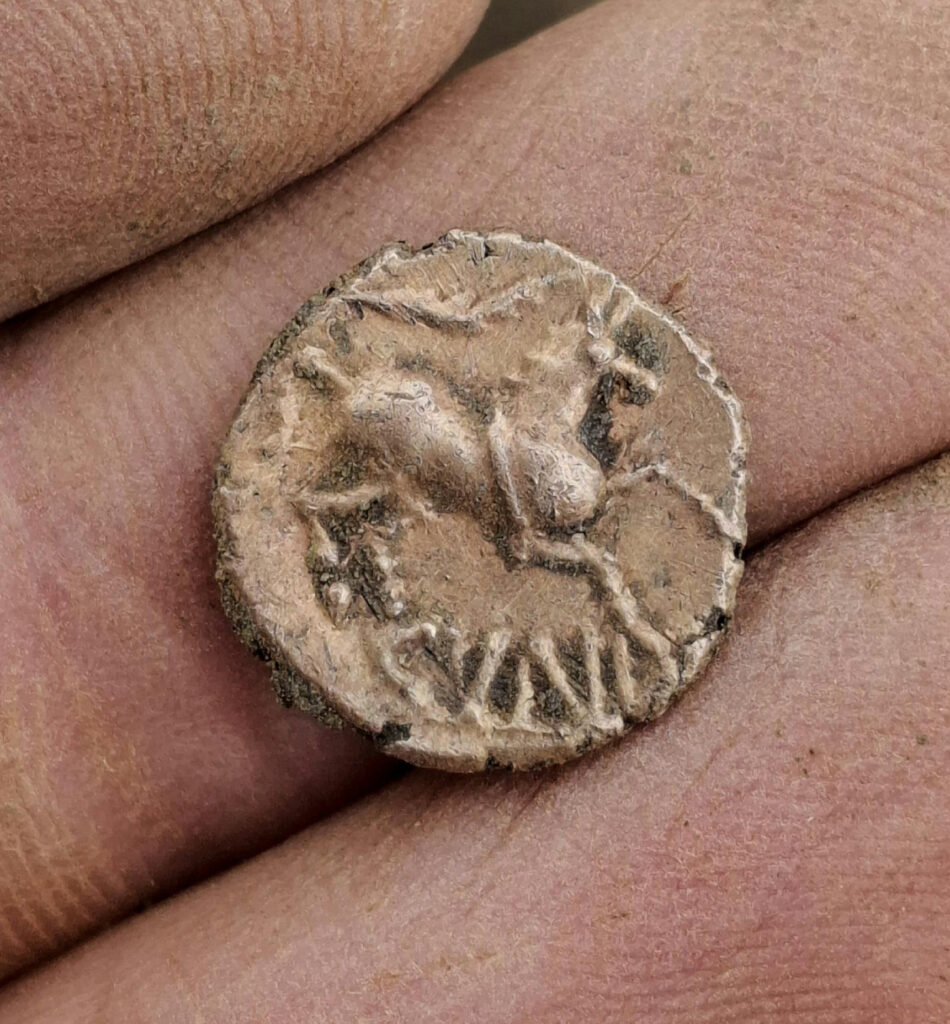
For this week’s #FindsFriday we have two fantastic coins of Cunobelin, dating to around AD 8-41. The gold coin is a Cunobelinus Wild type quarter stater, depicting an ear of corn on one side and a horse on the other. Gold’s resistance to corrosion has helped preserve it, despite 2,000 years underground. The bronze coin…
Read MoreNeolithic Frustration?
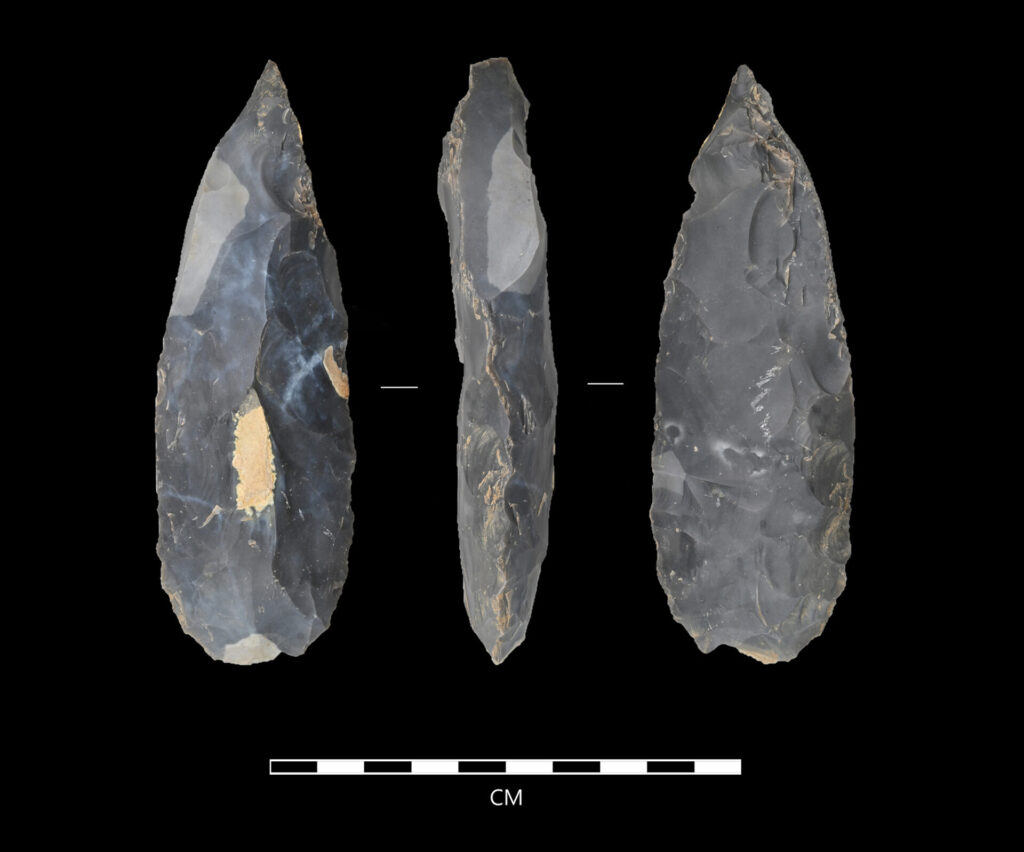
This week’s #FindsFriday is an unfinished Neolithic axe from Suffolk, known as a preform. There’s an issue with its butt end (the top part) which meant that, despite being nearly complete, it couldn’t be finished. Fascinatingly, the face in the right-hand image shows around three undeveloped points of percussion from being struck hard. It’s tempting…
Read More3D Saxon Comb Case
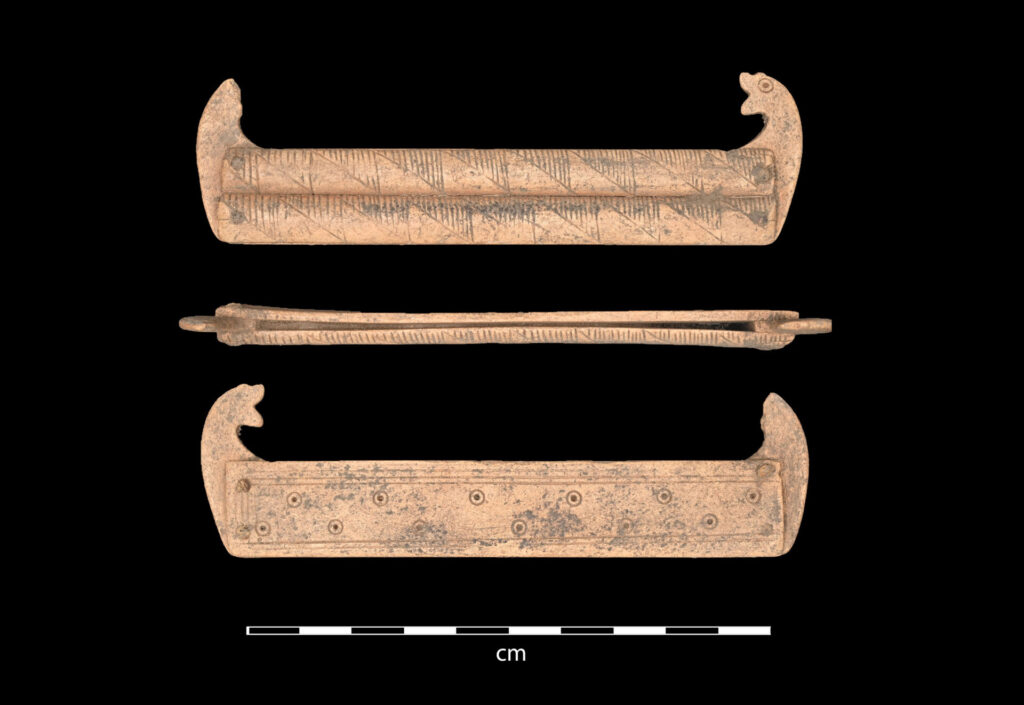
This beautifully decorated 5th-century AD Saxon comb case, from a site in Essex, would have kept a fragile comb safe. The intricate carvings and animal head finials highlight the artistry of the period, suggesting that everyday items were created with aesthetics in mind. Click here to check it out from all angles in our 3D…
Read MoreRoman Winchester’s Southern Cemetery
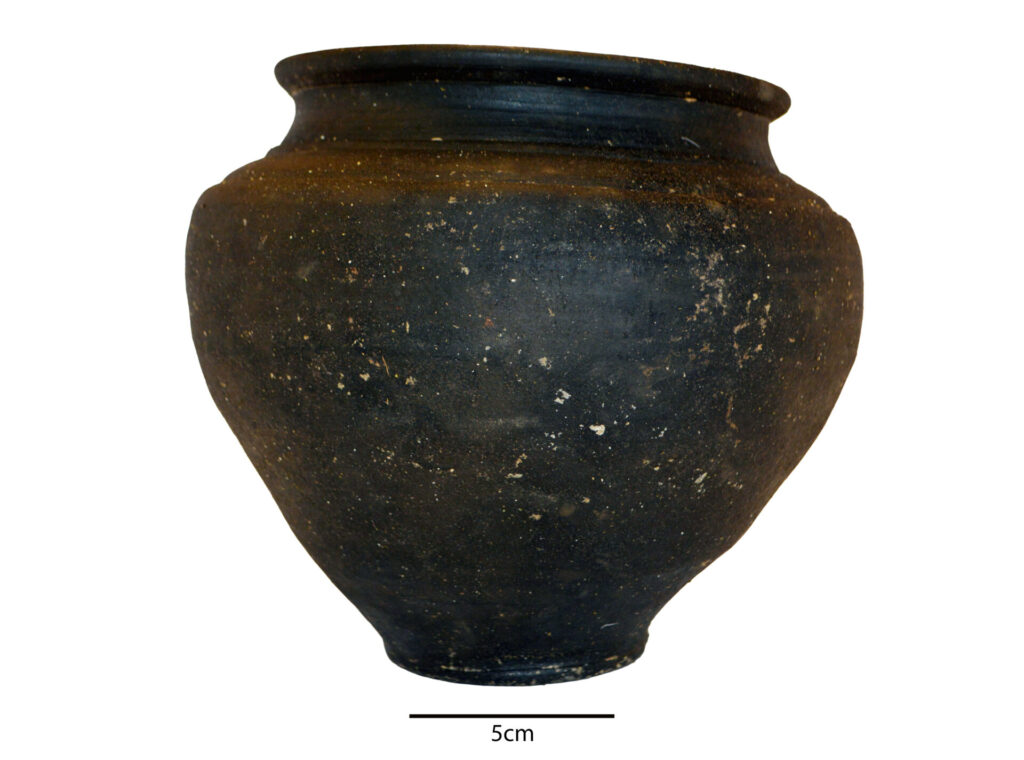
Today, we’re excited to share a glimpse into Roman Winchester’s southern cemetery, where recent work has revealed an intriguing burial assemblage. The black vessel held a cremation and it was found with two bow brooches and two Samian dishes — one of which served as a protective lid over the cremation. This site has also…
Read MoreA Rare Discovery
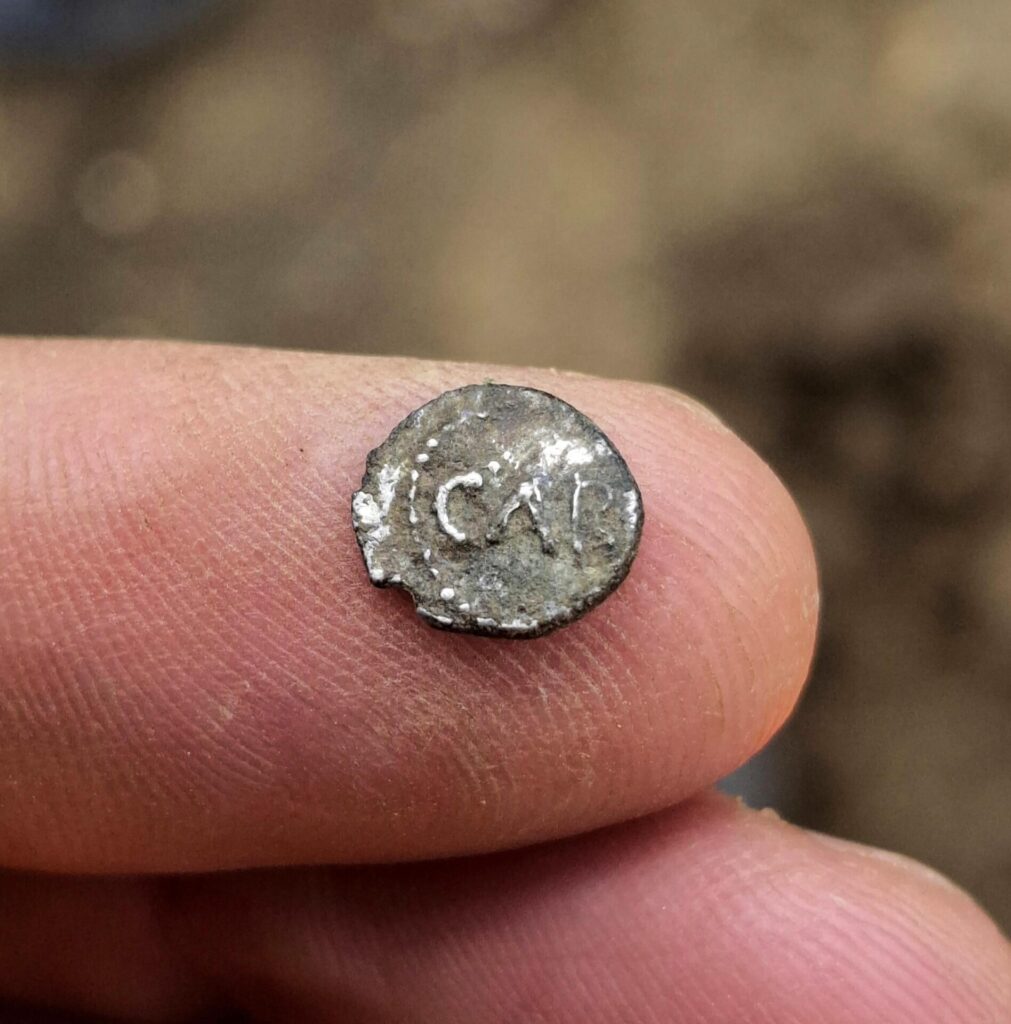
#FindsFriday This week we have an exciting find – a silver minim of Caratacus, known as a Caratacus Car type, dating c. 40-43. Caratacus was one of the sons of Cunobelin and one of the rulers who fought against the incoming Romans. Only one example of this coin was previously known, so this is only…
Read MoreFind of the Week
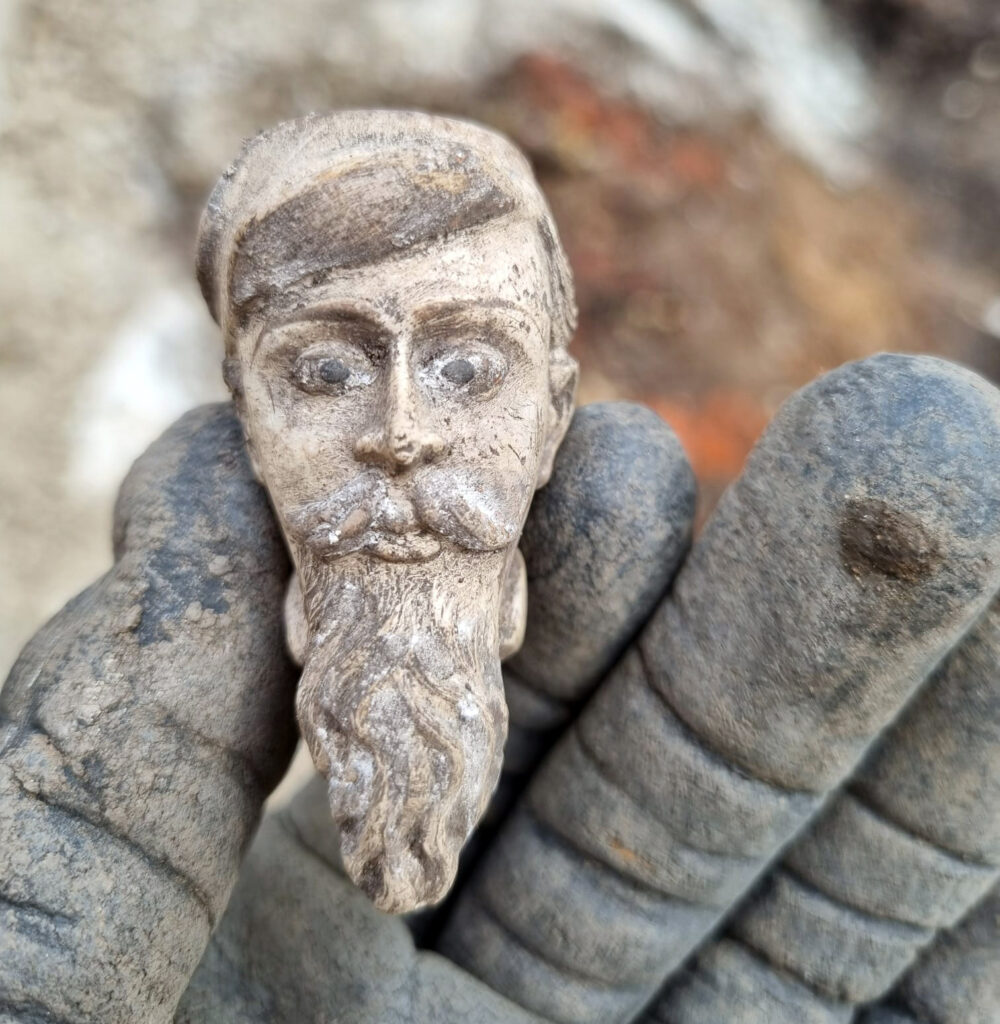
For #FindsFriday we have a stunning piece from the late 19th century—a beautifully moulded and enamelled clay tobacco pipe made by the renowned Paris company, Gambier. It’s a very rare find for London. This pipe features the “Student” (Etudiant) design shown in their catalogues, a motif that was both fashionable and symbolic of the era’s…
Read MoreAnglo-Saxon Brooch
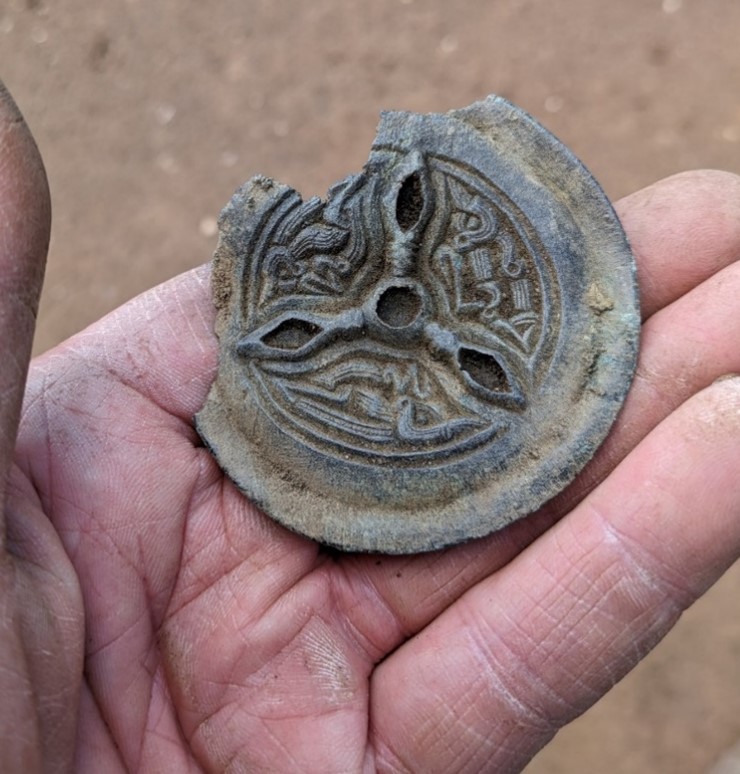
This stunning Anglo-Saxon cast saucer brooch is our star find so far from a site in the West Midlands! It would originally have had garnet inlays and dates to the 6th century. Although research is still in its early stages, no parallels have been found for this combination of animal decoration and triskele motif, suggesting…
Read More